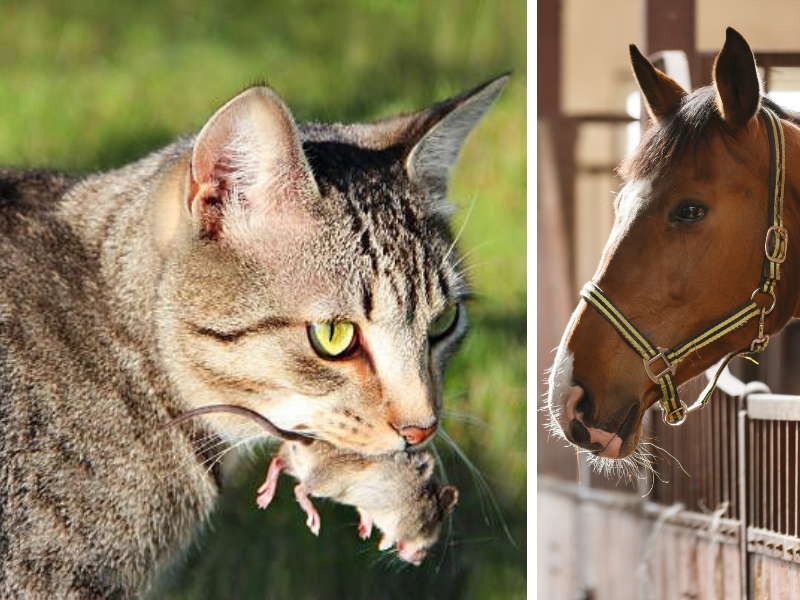
Got rodents at the barn? Your barn can benefit from some barn cats. Unwanted rodents are a problem in most barn settings. Horse feed and grain plus shelter attract these pests and provide a wonderful place to flourish. These rodents can wreak havoc by destroying tack, eating vehicle wires, creating waste nuisance, and these pests may even chew on your horse’s hooves!
Come horse around with us in SLO County! Get your FREE Horsing Around in SLO County Hotsheet and enjoy the places to you can trail ride, stay with your horse, show your horse, and sip wine where there’s a horse connection.
Barn Cat Benefits
Horse owners are animal lovers already, so adding a few furry barn cats to the mix is an easy solution to the inherent barn rodent population. Feral or semi-feral cats are great mousers and can be a key component to keeping the barn rodent population in check. Yet, where can one find good mousers?
Locally you can turn to the Feline Network of the Central Coast. This non-profit humane organization, based in San Luis Obispo, is dedicated to the spaying and neutering, care, rescue and adoption of kittens and cats. They strive to communicate the importance of responsible pet care and ownership and to educate the public on the necessity of spaying and neutering.
Adopting a Feral or Semi-feral Barn Cat
The Feline Network has feral and semi-feral fixed and vaccinated cats who are in need of safe garage/barn homes. Adopting at least two cats is recommended. They do best in groups of three or four.
Hey, I gotta share this with you . . . Head’s up. Purchasing products through clicking the the links or product pics that follow may result in providing us a little kick-back money. To learn more see the affiliate disclaimer near the end of this story.
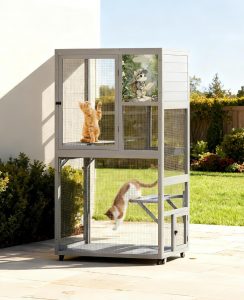
To become a home for a feral or semi-feral cats, the barn or garage setting must provide an enclosed shelter. The type of enclosure to keep the cats in while they acclimate to the new place needs to be a “catio” or a large dog crate (The Feline Network has a few, very large dog crates to loan out to acclimate the cats) or a chicken coop. This helps the barn cat acclimatize to the new property. The ongoing cat care will include daily feeding, water and the cat-specific shelter.
The barn cats will eventually bond with the person who feeds them, it will take some time, but the cats will learn the feeding routine and will anticipate the person feeding them. Over time, most cat feeders report that the feral cats recognize them and will even rub up against their legs while the food is being placed.
The Barn Cat Adoption Process
A prospective barn cat home must have a cat-specific shelter and a safe place for confining the cats for at least two weeks to one month upon arrival. The barn cats must be fed daily and have fresh water, plus safe places to hide from predators. A Feline Network volunteer will make a visit to the perspective new site to make sure the confinement is adequate to keep the cats safe. If the new site is deemed safe, then the volunteer will bring the cats to the new site. A new barn cat can be six months and older.
Are you looking for a couple or more of barn cats? Please contact Elaine at the Feline Network for more information: 805-458-3978
Feline Network of the Central Coast
Feline Network members are all volunteers — there is no paid staff. Generous local veterinarians donate their time to provide medical services at discounted fees.
The Feline Network became a non-profit organization in 2002 and has been spaying/neutering on average, 1500 cats and kittens per year. We are a tax exempt non-profit humane organization, 501C3 tax ID# 03-0467307. Donations are always graciously received.
Dealing with Feral Colonies
Ideally the Feline Network volunteers don’t actively move feral cats from their original colony sites. Instead, caring folks are encouraged to feed the feral cats. Over time, once all of the cats are spayed/neutered, their numbers will dwindle. Every once in a while, volunteers TNR (Trap-Neuter-Return) cats from unsafe situations to safer places. However, this is not something done lightly – the situation must be dire to warrant moving the cats.
The Feline Network follows the universal TNR procedures; Spay/neuter, tip one ear and give a Rabies vaccine.
The Feline Network of the Central Coast is here to support feral and semi-feral cat management and adoptions. Interested in adopting some barn cats? Please contact Elaine at the Feline Network for more information: 805-458-3978. Also please consider donating to this helpful organization.
Just so you know, clicking the above picture and product links takes you to the product on the Amazon website. This makes shopping easy and convenient for you. We do get a little kick-back from items purchased, giving us resources to bring you more stories, but your price stays the same. It’s a win-win! Happy Trails!
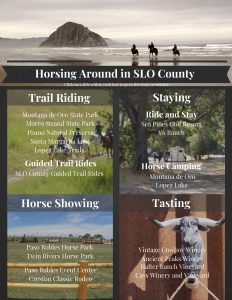
Come horse around with us in San Luis Obispo County! There are so many ways to horse around in stunning SLO County. To keep this info at your fingertips we have developed a FREE Hot Sheet that will direct you to stories which tell you where you can trail ride, stay with your horse, show and taste. We’ll continue to add horsing around stories to our website. You can stay up-to-date by becoming a SLO Horse News herd member. Get your Horsing Around in SLO County Hot Sheet here >.