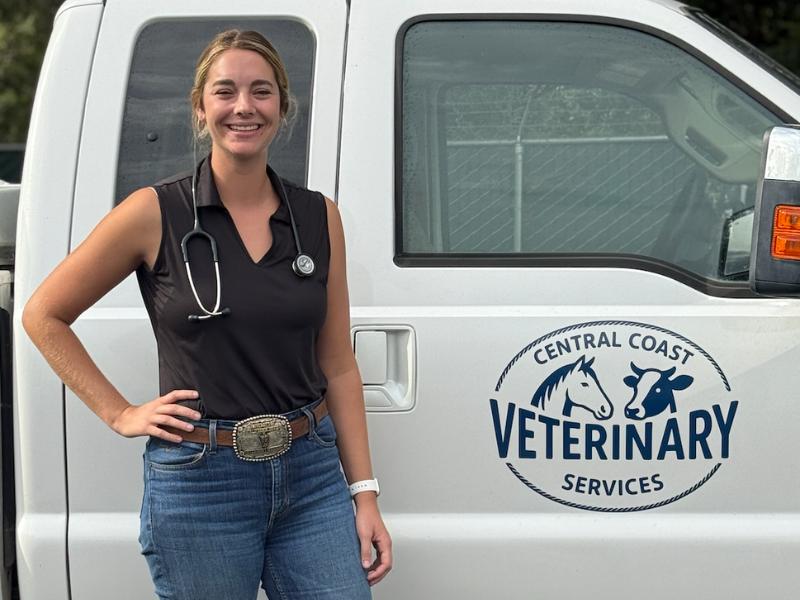
“A lot of change is happening in the equine vet industry,” says Dr. Shannon Hazlebeck of Central Coast Veterinary Services. “For a while, the trend was that less and less graduating veterinarians were entering the equine or large animal fields. The tide is now slowly changing, which is encouraging for the equine veterinary field.” Yet, as many horse owners experience, the shortage of qualified equine veterinarians, particularly in rural areas, can limit service availability.
Go ahead and make plans to get out of town. Use this Horse and Pet Care Communication Kit to ensure your pet sitter will be taking care of your pets the way you do.
Equine Veterinarian Shortage
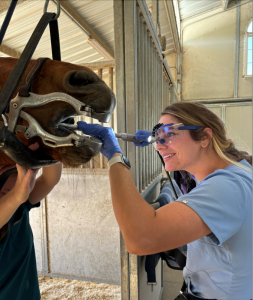
“The few vets that are practicing are very busy and are lacking in support due to the shortage of large animal vets,” explains Dr. Hazelbeck. “Some new or existing equine veterinarians encounter this difficulty and decide to enter the small animal field. Thus, the shortage of veterinarians begets a worse shortage of veterinarians. I am hopeful that the new generation of veterinarians will break this cycle.”
Equine Veterinarian Industry Market Trends
Although equine vets are retiring and a new crop is slowly entering the market, trends show the equine vet industry to be healthy. The American Horse Council estimates nearly 7.2 million horses are in the US, contributing over $122 billion annually to the economy. Key drivers of growth in the equine veterinary services sector include the increasing participation in equestrian sports and recreational riding. SLO County is home to top-level equestrian sport sites and offers a myriad of recreational riding opportunities.
Central Coast Veterinary Services Steps Up
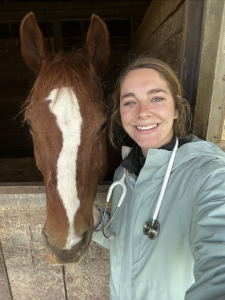
Central Coast Veterinary Services is rising to meet the local demand. Formerly an equine practice in SLO, this option is now rebooting with a new veterinarian, Dr. Shannon Hazlebeck, a SLO County native. She is working to overcome the cycle of attrition in the equine veterinary field by providing another outlet of care to the horse owners of SLO county.
“We offer equine veterinary services because we love horses!” says Dr. Hazlebeck, “But more importantly, we love the people that come with them. We purpose to provide meaningful, valuable, and compassionate care through our medical services.”
Central Coast Veterinary Services is a large animal mobile practice, serving all livestock species as well as horses. They have a clinic based in SLO on South Higuera with a pharmacy and a lab. This facility doubles as the small animal clinic Vetama. They do not handle large animal haul-ins, but are more than happy to come to you to see your animals! Vetama also offers house calls for small animals.
This new crew is excited to be serving the Central Coast. Call them to set up an appointment or ask any questions: (805) 316-0517.
Emergencies are never planned, so what can you have on hand to deal with medical situations?
Here are Dr. Hazlebeck’s Equine First Aid Kit recommendations:
Hey, I gotta share this with you . . . Head’s up. Purchasing products through clicking the the links or product pics that follow may result in providing us a little kick-back money. To learn more see the affiliate disclaimer near the end of this story.
Equine First Aid Kit
Thermometer: taking a horse’s rectal temperatures using a thermometer is important when monitoring for fevers. A fever for a horse is anything over 101.5 degrees Fahrenheit, but any elevation of temperature over your horse’s normal could be concerning, taking into consideration how hot or cold outside is.
Stethoscope: learning to take your horse’s heart rate using a stethoscope can be helpful in assessing colic severity, A normal adult horse heart rate is 28 to 44 beats per minute.
Bandage supplies: large nonstick Tefla pads, roll cotton, brown gauze, Vet Wrap, Elastikon, Duct Tape, diapers for covering hooves, bandage scissors
Wound cleaning supplies: gauze squares, some soaked in chlorhexidine scrub (diluted with water when using to clean wounds) and some gauze soaked in rubbing alcohol. I don’t recommend using hydrogen peroxide on wounds, as it can kill healthy tissue cells along with the bacteria.
Standing bandages: Use standing bandages under wraps for transport or to reduce stocking up, especially when stalled for any medical recovery.
Abscess Treatment: epsom salt and betadine solution to add to water for hoof soaks. I like to make the water the color of “iced tea” when I add betadine.
Banamine paste: Prescribed by a veterinarian. Do not give unless instructed by veterinarian. Banamine is a good to have on hand in case of post-vaccine soreness, fevers, colic, or any inflammation. If you do give any, always write down how much and when you gave it last to have on record for your veterinarian.
Other Considerations
Transportation arrangements: it is part of the personal responsibility of horse ownership to have trailer transportation available in case your horse needs to be referred to the hospital. Whether that be a friend, a hauler, or yourself, having a trailer or a contact is imperative when emergencies arise.
Best Practices to Prepare Your Horse for the Equine Veterinarian
- Horse should be caught and haltered in an easily-accessible area that is well-lit, with flat ground if possible.
- Desensitizing your horse to common things a vet will do (taking a rectal temp, being touched by a stethoscope, lifting the lip to check the gums, picking up feet, palpating digital pulses) For ease of IV injections or blood draws, start working with your horse by first desensitizing them to pressure on the jugular veins, practice with them by holding off the veins and rewarding them to make their experience at the vet easier.
- Practice wrapping or bandaging your horse’s leg so you’ll both be prepared for an emergency situation.
So get your equine first aid kit stocked and ready, then be sure your horse can be a good patient when the vet arrives.
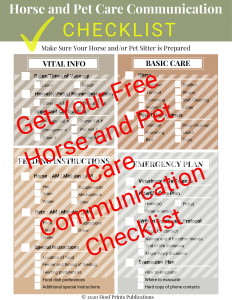
Are you prepared to leave your animals in the care of a pet sitter? The Horse and Pet Care Communication Checklist enables you to gather all the vital information you need to communicate all the elements of all your animals’ care to your pet sitter. What if you suddenly had to leave town? Would you be ready for someone to quickly step in and take care of your animals? What if something happened to your horse or pet while you were away? Would your pet sitter know your wishes? This checklist will help you prepare your pet sitter to care for your animals the way you do. Get your Horse and Pet Care Free Checklist here >.